

From Snake-Blinding Myths to Sunken Galleons: 5 Surprising Truths About the World’s Most Famous Green Gem
From Snake-Blinding Myths to Sunken Galleons: 5 Surprising Truths About the World’s Most Famous Green Gem
Introduction: The Eternal Allure of the Green Fire
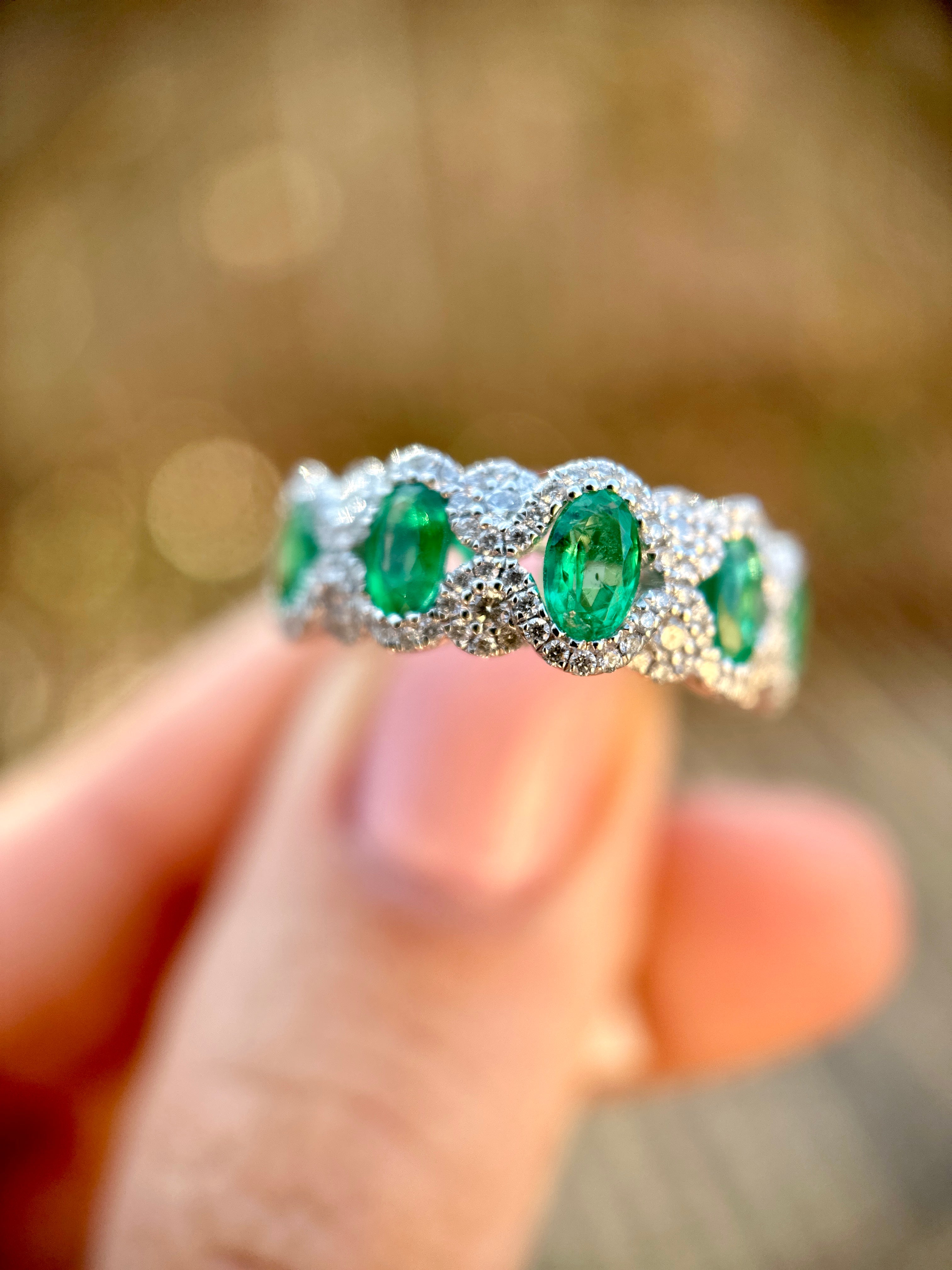
For millennia, the emerald has occupied a singular, shimmering place in the human imagination. More than a mere variety of the mineral beryl, it is a stone that has fueled imperial conquest, inspired religious devotion, and driven men to the depths of the sea. From the sun-scorched "Cleopatra’s Mines" in the Red Sea Hills to the treacherous, hurricane-swept Florida Straits, the pursuit of this "green fire" is a story written in both geological marvel and human tragedy. While modern collectors obsess over the "jardin"—the moss-like internal inclusions that give each stone its soul—the true history of the emerald is far more counter-intuitive than the myths suggest. We are about to peel back the layers of history and science to reveal the truth behind the world's most coveted green gem.
The "Cleopatra" Standard: Ancient Egypt’s Surprising Mediocrity
The very name "Cleopatra’s Mines" evokes images of peerless, regal treasures. Historically, the Marsa Alam region of Upper Egypt was the epicenter of the emerald world, supplying the Graeco-Roman Empire for centuries. However, as a gemologist looking back through the lens of modern science, the reality is surprisingly lackluster: by today’s standards, most Egyptian emeralds were of "mediocre" quality.
Geological analysis reveals that these ancient stones were typically small, heavily included, and somewhat translucent. From a mineralogical perspective, the Egyptian stones are distinguished from their famous Colombian cousins by their trace elements. Egyptian emeralds possess a significant iron content, which often results in a lighter, paler tone compared to the chromium and vanadium-dominant stones of South America. Despite these physical "flaws," Egypt remained the preeminent source for nearly 2,000 years for one simple reason: exclusivity.
"Until the Spaniards' 16th-century discovery of emerald deposits in what is now Colombia, Egypt was the only significant source of this beryl variety as a gem material."
The mines were a source of immense imperial pride until the reign of Sultan al-Kamil (ending around 1237 AD), after which production became sporadic. By 1740, the legendary sites were completely abandoned and essentially "lost" to history, remaining a desert ghost until their 1816 rediscovery by French explorer Frédéric Cailliaud.
The Snake-Bursting Myth: A Strange Test of Authenticity
In the absence of refractometers and spectrometers, medieval lapidaries relied on folklore and bizarre physical "tests" to verify a stone’s power. Early Islamic scholars categorized emeralds into four distinct grades. The most prized was the al-Dhubabi variety, a name derived from the dhubab—the flies found on roses in springtime, which possess the purest and most intense green hue.
The al-Dhubabi was believed to harbor a "mystical energy" so potent it could physically shatter the gaze of a predator. The 13th-century writer Ahmad Al-Tifashi famously recorded an experiment to prove the gem’s truth-detecting power using a live snake in a basin. The belief was that a true emerald’s celestial purity was anathema to the "dark" nature of the serpent.
Al-Tifashi described the harrowing results: "I heard a gentle crackling, and saw that the eyes of the snake had melted and were clearly protruding..."
While we now recognize this as biological impossibility, it reveals a profound cultural truth: the emerald was seen as a stone of absolute "vision." It was thought to possess a clarity so piercing that it could literally unmake the eyes of those who represented deception.
The 70-Pound Treasure of the Atocha: The High Stakes of the Hurricane Season
The global aesthetic of the emerald changed forever on September 6, 1622, when the Spanish galleon Nuestra Señora de Atocha met the business end of a hurricane in the Florida Straits. The ship was heaving with the loot of the New World: 40 tons of gold and silver, and 70 pounds of high-quality emeralds from the Muzo mines of Colombia.
The tragedy was born of bureaucratic irony. The Atocha was delayed in port for six weeks simply because the sheer volume of treasure required a monumental effort to inventory and load. This delay pushed the fleet directly into the peak of the Atlantic hurricane season. When the ship was torn apart on a reef, it took nearly its entire crew to the seabed—only five survived. The human cost of these stones was further highlighted during early salvage attempts on the sister ship, the Santa Margarita, where Spanish authorities used primitive bronze diving bells and exploited slaves to recover cargo, a dangerous task that resulted in numerous deaths.
When treasure hunter Mel Fisher finally located the wreck in 1985, he recovered masterpieces like the "La Gloria" emerald, a staggering 887-carat rough stone. These Colombian gems, with their rich, blue-green saturation, fundamentally shifted the world’s value of the stone, making the ancient "Cleopatra" variety look pale by comparison.
Spiritual Rebirth and Truth-Detecting: More Than Just a Pretty Stone
Across vastly different geographies and eras, the emerald has consistently been linked to "vision," though the spiritual application of that vision varies:
- Ancient Egypt: Linked to the "eyes of the soul," emeralds represented rebirth and eternal life, buried with the deceased to ensure safe passage through the afterlife.
- Medieval Europe: Knights and nobles wore them as amulets to reveal truth and detect lies, believing the stone acted as a moral compass that would lose its color in the presence of infidelity.
- The Muzo of Colombia: Their mythology tells of the goddess Fura and her lover Tena. Upon their tragic deaths, their tears of sorrow were said to have transformed into the emeralds hidden within the mountain peaks that still bear their names.
Whether linked to the heart chakra in spiritual healing or the planet Mercury in Indian tradition, the stone represents a "renewal of life." Its green hue is a universal shorthand for nature’s vitality and the power to see what remains hidden to the naked eye.
The Modern Ghost Mines: Hunting for "Float" in the Desert
Today, the imperial tunnels of the Red Sea Hills are largely silent. There is no official industrial mining; instead, the legendary mines have returned to the hands of the desert’s most patient residents. Modern recovery is conducted by Bedouin tribespeople using a method that is as ancient as it is counter-intuitive.
Between November and March, the region receives its scant rainfall. These brief, violent storms cause flash floods to roar through the "wadis" (dry riverbeds), scouring the canyons and washing sand and gravel from the old mine tailings. After the waters subside, the Bedouin sort through the freshly uncovered surface gravel by hand, searching for "float"—small emerald fragments weathered out of the host schist. It is a slow, hand-gathered harvest, where the Earth only yields its green treasures when the weather decides to reveal them.
Conclusion: A Legacy Set in Stone
The emerald remains a geological marvel—a rare bridge where the heat of gneissic granite meets the mineral-rich embrace of schist. Yet its value has never been purely a matter of chemical composition or the absence of inclusions. Its true "fire" is fueled by the centuries of human drama attached to it, from the amulets of Cleopatra to the drowned sailors of the Atocha.
As you look into the "jardin" of a modern emerald, ask yourself: does its worth lie in its flawless clarity, or in the weight of the myths, the tragedies, and the spiritual hopes that have been set in its green depths for over two thousand years? Perhaps the true value of an emerald, like the Bedouin’s "float," only surfaces when we look past the shine and into the history.