

Beyond the Blue: 5 Surprising Secrets from the Secret History of Sapphires
Beyond the Blue: 5 Surprising Secrets from the Secret History of Sapphires
1. Introduction: The Stone of Royalty and Riddles
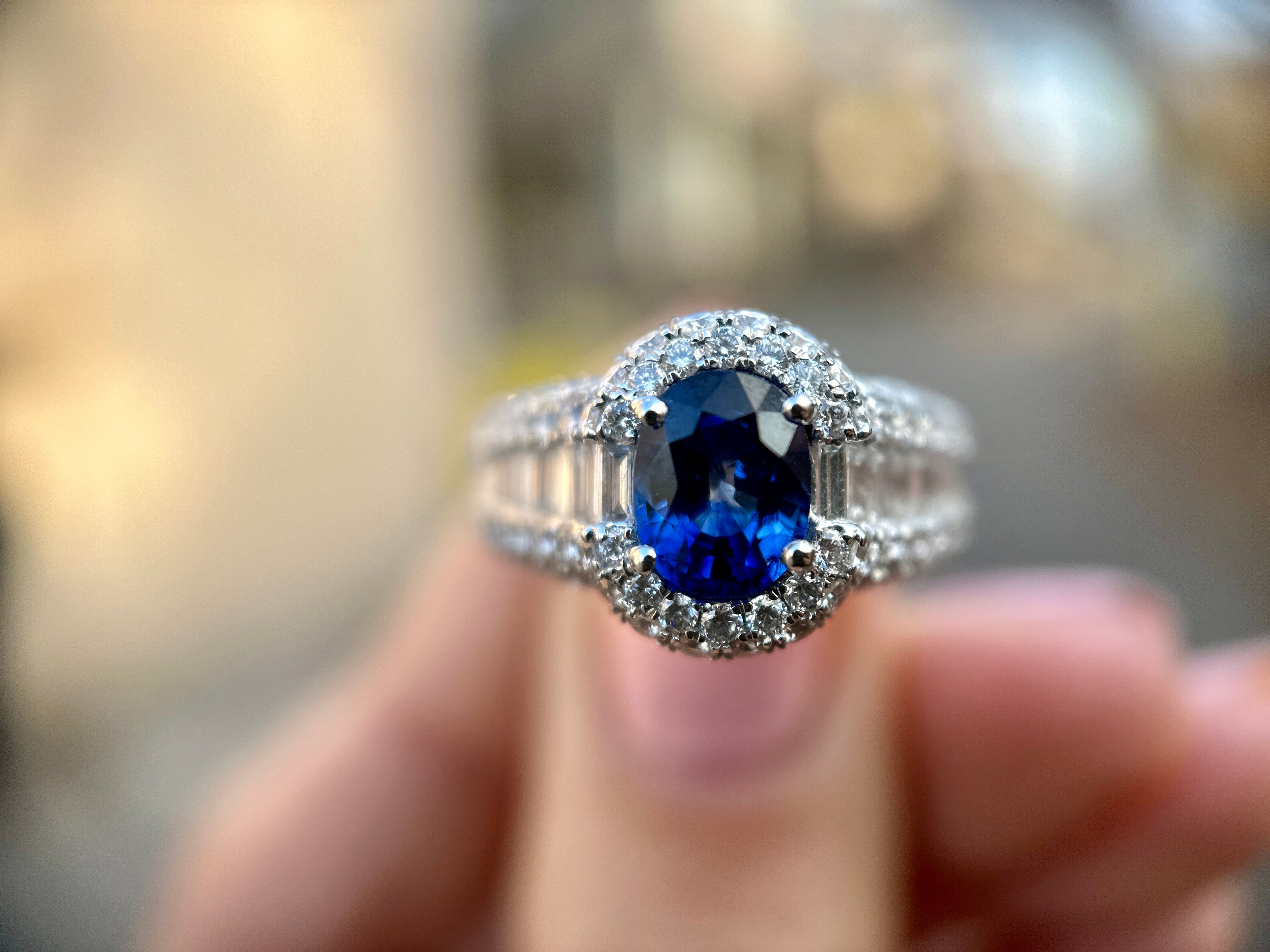
The sapphire has long served as the ultimate emblem of nobility, a status famously cemented in the public consciousness when Prince Charles presented a 12-carat oval blue sapphire to Lady Diana Spencer in 1981. Yet, to peel back the layers of sapphire history is to enter a world of subterranean secrets and alchemical ambition. What we perceive today as a symbol of celestial purity has a "hidden" history defined as much by ancient deception as by accidental discovery. Beneath the velvety surface of these royal favorites lies a narrative of 25-million-year-old geological time capsules, high-stakes heists facilitated by dead batteries, and a century-old revolution that democratized luxury.
2. The Landslide that Changed Jewelry History: The Kashmir Legend
In the annals of gemology, few names carry the weight of "Kashmir." The legend began in 1881, at a staggering elevation of 15,000 feet in the Padar District of the Himalayas. A massive landslide in the Soomjam region revealed a deposit that would redefine the standards of excellence for blue corundum. These stones, found within metamorphic host rocks of gneisses and schists, possess the heralded "Cornflower-blue"—a deeply saturated hue paired with a unique "velvety luster." This hazy appearance, prized by collectors, is the result of microscopic inclusions that scatter light without sacrificing transparency.
The rarity of these gems is nearly absolute. The primary production window lasted a mere six years, from 1881 to 1887, before the deposit was largely exhausted. This tiny chronological sliver, combined with the extreme remoteness of the site—requiring early explorers to trek 160 miles through rugged terrain—has elevated the Kashmir sapphire to mythic status. As Dr. James Shigley notes in the GIA archives:
"For nearly 150 years, blue sapphires from a relatively inaccessible mountainous region of Kashmir... have been considered the most rare and beautiful of the corundum gems because of a combination of their saturated color, velvety luster, and slightly hazy appearance."
Modern science has furthered the mystique; U-Pb dating of zircon inclusions within these stones has revealed a crystallization age of 25–26 million years, providing a definitive geological "fingerprint" for the finest sapphires ever found.
3. The "Dead Battery" Heist: The Scandalous Journey of the Star of India
If the Kashmir sapphire represents geological perfection, the Star of India represents human intrigue. Weighing a massive 563.35 carats, this Sri Lankan-mined treasure is celebrated for its unusual "double-sided" asterism—a six-rayed star appearing on both the top and bottom of the cabochon. This effect is caused by the presence of rutile "silk," tiny mineral fibers aligned in a three-fold pattern that reflect incoming light.
In 1964, the gem became the center of an absurdly preventable scandal. Stolen from the American Museum of Natural History by a gang led by Jack Roland Murphy (the infamous "Murph the Surf"), the heist exploited a series of catastrophic security failures. The thieves entered through a bathroom window left unlocked during museum hours. Upon reaching the sapphire, they discovered it was the only stone in the hall protected by an alarm—but the battery in that alarm was dead.
The absurdity reached its zenith during the recovery. In January 1965, the uninsured Star of India was found abandoned in a common Miami bus locker. This journey from a prestigious Manhattan vault to a dusty transit locker remains a poignant reminder of the fragility of even our most "secure" cultural treasures.
4. Ancient "Bio-Hacking": Goat’s Blood and Leek Juice Recipes
While we consider gemstone treatment a modern controversy, the quest to improve on nature is nearly as old as civilization itself. Ancient "gemological chemists," as recorded in the Stockholm Papyrus (c. 400 A.D.), were early masters of what we might call "bio-hacking." These practitioners didn't merely simulate stones; they sought to "open" and "soften" them through a process of thermal shock.
By heating a crystal (often rock crystal or quartz) over a "gentle fire" and quenching it in liquids like goat’s blood, vinegar, or boiling leek juice, they created a network of microscopic fractures. This induced porosity allowed dyes—ranging from "putrid urine" to "steer’s gall"—to penetrate the stone’s interior through chemical diffusion. These ancient forerunners discovered the foundational principles of heat treatment and dyeing that remain the backbone of the industry today. However, the ethical divide was already clear. As Pliny the Elder wrote in the first century A.D.:
"To tell the truth, there is no fraud or deceit in the world which yields greater gain and profit than that of counterfeiting gems."
5. Born from Flame: The 1902 Synthetic Revolution
The ancient desire to interfere with nature reached its molecular conclusion in 1902. French chemist Auguste Verneuil, inspired by the mysterious "Geneva rubies" that had surfaced in the 1880s, perfected the "flame fusion" process. He utilized an oxyhydrogen torch to melt purified alumina powder (aluminum oxide) at temperatures exceeding 2000°C. As the molten droplets fell onto a support, they crystallized into a "boule."
By substituting chromium oxide with ferric oxide and titania, Verneuil could grow blue sapphires that were—and are—chemically, physically, and optically equivalent to natural stones. This discovery democratized luxury, yet it created a permanent diagnostic challenge. To the naked eye, a Verneuil sapphire is identical to its natural counterpart; it requires a trained gemologist and high magnification to locate the telltale "curved growth lines" of the laboratory process, which contrast with the straight, parallel growth planes of the earth-born gem.
6. The Great Linguistic Mix-Up: When "Sapphire" Meant Something Else
Our modern definition of "sapphire" as blue corundum is a relatively recent consensus. Historically, the word has been a source of significant etymological confusion. The Greek sappheiros almost certainly referred to lapis lazuli. Ancient texts often describe sappheiros as being "sprinkled with gold," a clear reference to the pyrite flecks in lapis that were seen as a reflection of the star-studded heavens.
The sapphire family is far broader than the blue standard. Perhaps the most coveted is the Padparadscha, a rare orangy-pink variety found in the river gravels of Sri Lanka. Its name, derived from the Sinhalese for "lotus flower," underscores the cultural specificity of gem nomenclature. It was only with the advancement of chemical analysis that we narrowed the definition of sapphire to its current mineralogical place.
7. Conclusion: A Future Forged in the Past
The history of the sapphire is a continuum of human interference and ingenuity. The ancient "softening" recipes of the Stockholm Papyrus are the direct ancestors of today’s advanced laboratory enhancements. In the 21st century, this legacy persists through CAD (Computer-Aided Design), laser cutting, and sustainable lab-grown stones that optimize light performance with mathematical precision.
Ultimately, we are left with a philosophical question of value. Does the true worth of a stone lie in its 25-million-year-old geological journey—the "time capsule" of U-Pb dated zircon inclusions found in a Kashmir original—or does it lie in the human brilliance that can now grow and cut the same beauty in a laboratory? Whether forged in the pressure of the Himalayas or the heat of a Verneuil furnace, the sapphire remains a masterpiece of both nature and the human mind.